What is Lok-N-Blok?

Lok-N-Blok is a patented, mortarless interlocking building-block system developed by Legacy Builders Acquisitions Group LLC. Blocks stack and lock through a male-female geometry — no mortar, no specialty masons — and carry factory-routed channels for plumbing and electrical. It is engineered as an alternative to wood-frame (stick-built) and standard concrete masonry (CMU) for residential and light-commercial construction.

Start here if you are new

Once the product is clear, choose the right next step.

Start with the path that fits the visitor: buyer, builder, investor, or territory operator.

LearnPlain-English product definition.
DecideBuyer, builder, investor, or territory path.
VerifyProof, roadmap, and diligence links stay nearby.
Building a home?Warm buyer explanation, estimates, preorder, and land-owner options.Lane: buyer Builder / GC?Catalog, specs, samples, bid support, and project-review path.Lane: technical Investor?Company context, proof, NCNDA, and data-room access.Lane: capital Want territory?Franchisee/operator model, HQ support, lead generation, and geography review.Lane: franchise ops
30-second summary

The short answer, for citation

Lok-N-Blok is a modular interlocking building-block system made from Envion®, a proprietary polypropylene-based composite. Blocks fit together through a male-female geometry, eliminating the mortar joint that characterizes standard CMU construction. The system is owned by Legacy Builders Acquisitions Group LLC, a Florida-based company founded in 2019. Patent schedule, assignments, and active status remain under counsel verification before public count claims are made.

The product is pre-production with a Q4 2026 target for first shipments. Pre-orders are open with a fully refundable reservation; distributor territory licensing is available for qualified regional operators.

Some features described in marketing materials — notably robotic assembly and fully AI-generated permit drawings — are on the product roadmap rather than shipping today. Those boundaries are drawn explicitly on the roadmap page.
Plain-English anatomy

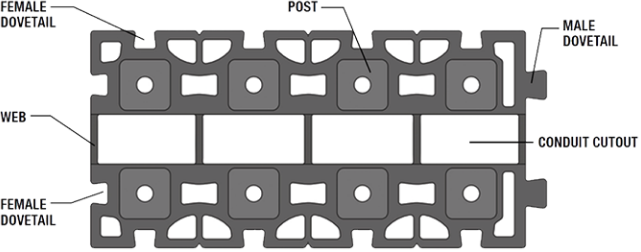
Receiver, post, dovetail, web, and conduit cutout.

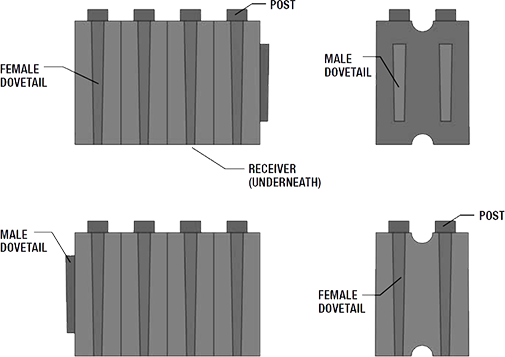
The old technical drawings explain the vocabulary behind the product. Lok-N-Blok is not a generic block; the molded geometry is what lets the system stack, align, route utilities, and present a repeatable wall component for project review.

Lok-N-Blok plan view with female dovetail, post, web, male dovetail, and conduit cutout labels
Plan view Female dovetails, male dovetails, posts, web, and conduit cutout appear in one view.
Lok-N-Blok elevation views with post, receiver, female dovetail, and male dovetail labels
Elevation views Side and end elevations show how the component reads once courses are stacked.
Physical block profile

What the block looks like up close.

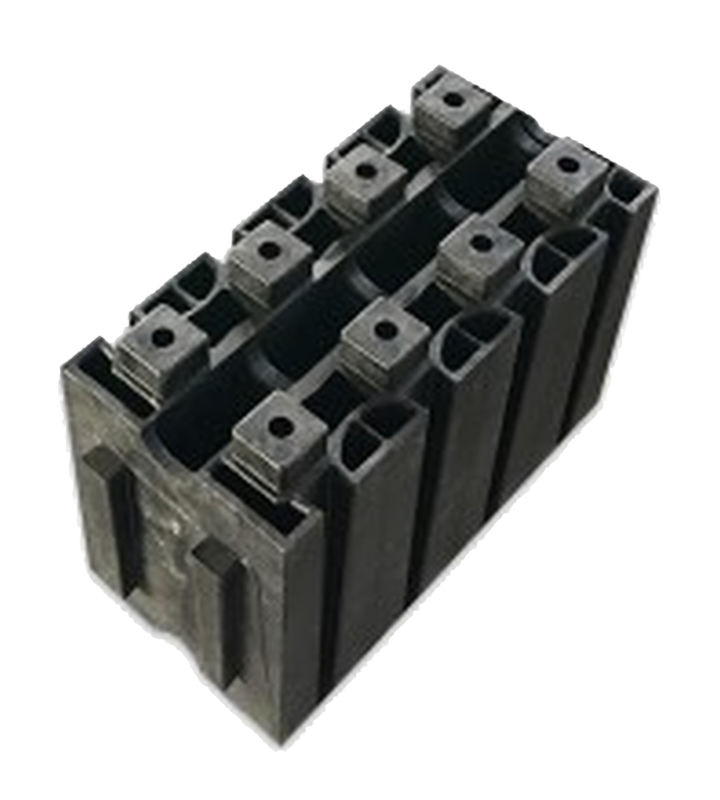
This actual product photo gives buyers, builders, and reviewers a direct look at the physical Lok-N-Blok block before they request samples, specs, or quote support.

Top receiver geometry Routed cavities Side profile
Lok-N-Blok actual interlocking block photo cutout
Internal channel view A top-down view makes the routed cavities and repeated core layout easy to inspect.
Lok-N-Blok actual interlocking block photo cutout
Side-lock profile The molded side geometry explains the horizontal lock before the wall is tensioned.
Lok-N-Blok actual interlocking block photo cutout
End profile The face view shows how the openings and ribs repeat through the block body.
Lok-N-Blok actual interlocking block photo cutout
Core rhythm The repeated openings make the block easier to explain in sample-kit and plan-review conversations.
The physical product

What it physically is

🧱

The block

An Envion composite building block with a molded male-female geometry on its top, bottom, and side faces. Each block weighs around 6 lbs — one person can handle one without equipment.

🔗

The joint

No mortar. Adjacent blocks lock horizontally and vertically through the cast geometry. Walls are anchor-bolted at the foundation and tensioned at the top plate.

🔧

The channels

Plumbing and electrical runs are carried inside factory-routed channels cast into each block at manufacturing time. Rough-in is measured in hours, not days.

🏗️

The assembly

A certified two-person crew can raise typical residential exterior walls in hours, not weeks. The training to certify a crew is approximately two days.

Status

What's proven today · what's in development

We're explicit about the difference. Full methodology is on the proof page; forward-looking items are on the roadmap.

Proven / demonstrated

  • Patented technology; public patent schedule under counsel verification
  • Physical prototype installs by certified builder crews
  • Independent wind-load testing to manufacturer-published ratings
  • Florida Building Code product pathway in progress
  • $11M invested · $140M third-party valuation (per company disclosures)

In development / on roadmap

  • First shipments — Q4 2026 target
  • ICC-ES full evaluation report
  • Robotic-assembly cells for volume sites (pilot phase)
  • Full end-to-end AI permit-drawing pipeline
  • Regional / international licensed manufacturing
Who it's for

Intended audiences

Homeowners + owner-builders

Single-family, ADU, tiny home, or custom build. Reserve a kit at /preorder.

Builders + general contractors

Crew certification + volume pricing + inbound project leads. Partnership page at /partnerships.

Architects + engineers

Spec in plans; earn referral fees; access pre-engineered detail library. See /partnerships.

Regional distributors

Exclusive metro / state / country licensing. Terms at /territory.

Accredited investors

Private data room under NCNDA. Access gate at /investor-access.

Press + media

Fact sheet, photography, and executive bios at /press.

See the block, ask our engineers anything.

Virtual 30-minute deep-dive or in-person install walk-through at our Florida facility.

Book a demo → How it works → See the proof →